

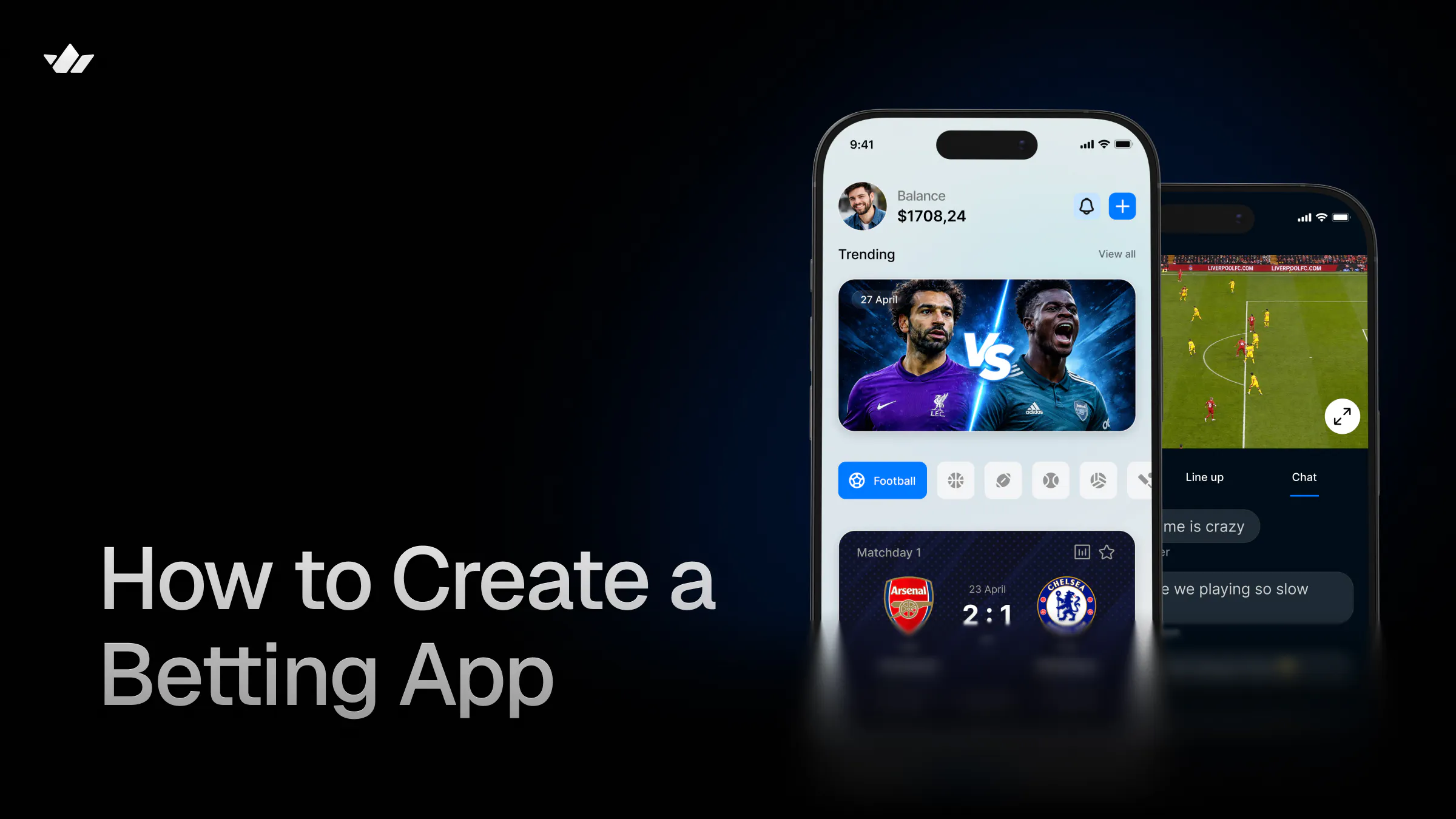
Mobile betting apps are no longer niche products.
Globally, the online gambling market is projected to surpass $150 billion by 2030. And in the U.S., where 32 states and Washington D.C. have already legalized sports betting apps, federally regulated prediction markets are pushing the category beyond state-licensed sportsbooks.
For teams exploring how to create a betting app, the opportunity is clear — and the operational bar is high. These platforms manage real-money transactions, live data feeds, and jurisdictional enforcement inside a single system.
This guide walks through the architectural, compliance, and product decisions that shape mobile betting apps.
The 2026 Market for Mobile Betting Apps
“Online betting app” isn’t a single product type. It covers multiple models, each with distinct technical requirements and regulatory obligations.
| Category | Examples | Core Mechanic | Regulatory Intensity |
|---|---|---|---|
| Sports betting | FanDuel, DraftKings, BetMGM | Fixed-odds & live betting | High |
| Online casino | BetMGM Casino, Caesars | RNG-based slots, poker | Very High |
| Daily fantasy sports | DraftKings DFS | Entry-fee contests | Moderate |
| Horse racing | TVG, TwinSpires | Pari-mutuel | High |
| Prediction markets | Kalshi, Polymarket | Event-based contracts | Emerging |
Across models, mobile dominates usage. In regulated U.S. markets, most wagers today are placed through mobile betting apps over desktop platforms.
While distribution patterns are similar, the underlying product models differ structurally. Each one changes:
- Liquidity requirements
- Data feed dependencies
- Risk exposure and pricing logic
- Regulatory review processes
- Customer acquisition economics
That translates into different operational demands. For example, a live sportsbook requires real-time pricing and continuous risk monitoring, while an online casino centers on RNG-driven outcomes and statistical margin.
Clarity here prevents expensive pivots later. Choosing a category defines your architecture, compliance path, and roadmap — before the focus shifts to development.
Early Product Decisions for Development
Mobile betting apps depend on interconnected services, with stack choices shaping everything from launch speed to operational control.
Before writing any code, a few structural decisions set the direction:
1. Build vs Buy Infrastructure
Betting apps rely on specialized components, including:
- Odds engines
- Risk and exposure management
- Sports data feeds
- KYC and AML providers
- Payment processing
- Fraud detection
- Real-time messaging (e.g., chat, activity feeds, notifications)
Somewhere in the stack, most teams rely on external services. The real decision is which systems you build and control — and which you license.
| Build (Own Infrastructure) | Buy (License Services) |
|---|---|
| Control ↑ | Launch speed ↑ |
| Margin flexibility ↑ | Compliance lift ↓ |
| Engineering burden ↑ | Flexibility ↓ |
| Compliance responsibility ↑ | Vendor dependency ↑ |
Most product teams take a hybrid approach: own what drives margin and differentiation, and license commoditized services.
2. Real-Time Architecture Requirements
Latency affects revenue directly. In event-driven betting systems — like those powering FanDuel and BetMGM — pricing and risk services update continuously as new data arrives, which demands low-latency propagation across services.
Supporting that requires:
- Event-driven architecture
- Streaming data ingestion
- Consistent wallet state
- Automated bet suspension
- 99.9%+ uptime
As latency rises, abandoned bet slips increase. That pressure shapes early design decisions like isolating wallet and risk services, enforcing atomic transactions, designing idempotent settlement logic, and load testing for peak event traffic.
Live feeds, chat, and notifications add further event fan-out and delivery guarantees, increasing scalability and fault-tolerance requirements.
3. Regulatory Architecture
Regulation sets the operating constraints for your product. Common requirements include:
- Geo-fencing (GPS and IP verification)
- Age verification
- KYC identity checks
- AML transaction monitoring
- Self-exclusion controls
- Regulatory reporting
In the U.S., sports betting is regulated at the state level. Online casinos are permitted in fewer states, while prediction markets — at least for now — operate under federal CFTC oversight.
These rules translate directly into system design:
→ State-aware access controls.
→ Audit logs retained for regulators.
→ Compliance services separated from core betting logic.
→ Structured reporting and export pipelines.
Compliance isn’t a layer you add later. Retrofitting it introduces operational risk and can delay expansion into new jurisdictions.
4. App Store & Play Store Distribution Constraints
App store approval adds a second enforcement layer on top of jurisdictional regulation.
Both Apple and Google validate core compliance systems — including geo-restriction, age gating, responsible gambling disclosures, and licensed operation in approved jurisdictions — during review.
They also impose platform-specific distribution constraints:
- On Google Play, real-money gambling apps must be free to download and may not use Google Play’s in-app billing for wagering or deposits.
- On the Apple App Store, real-money betting apps must also be free to download, use external payment processing for wagering, and be submitted by the licensed operator responsible for the offering.
Because app store billing can’t be used for gambling, wallets must run on external payment rails from the start. Approval is a launch gate — and ongoing compliance protects against delisting.
With these constraints accounted for, the focus can shift to feature design and user experience.
Essential Features for New Betting Apps
Architecture determines whether your platform runs. Features determine whether it grows.
In 2026, the best betting apps are expected to deliver real-time updates, intuitive wagering flows, and built-in trust signals from the first session.
Core Betting Engine Features
At the core of any betting platform is a transactional engine that handles identity, money, and market state in real time.
Most betting products require:
- Secure account creation
- KYC integration
- Wallet and payment processing
- Market discovery and browsing
- Bet slip management
- Real-time odds updates
- Settlement logic
- Transaction history
These features may look straightforward, but they operate under strict timing and consistency constraints.
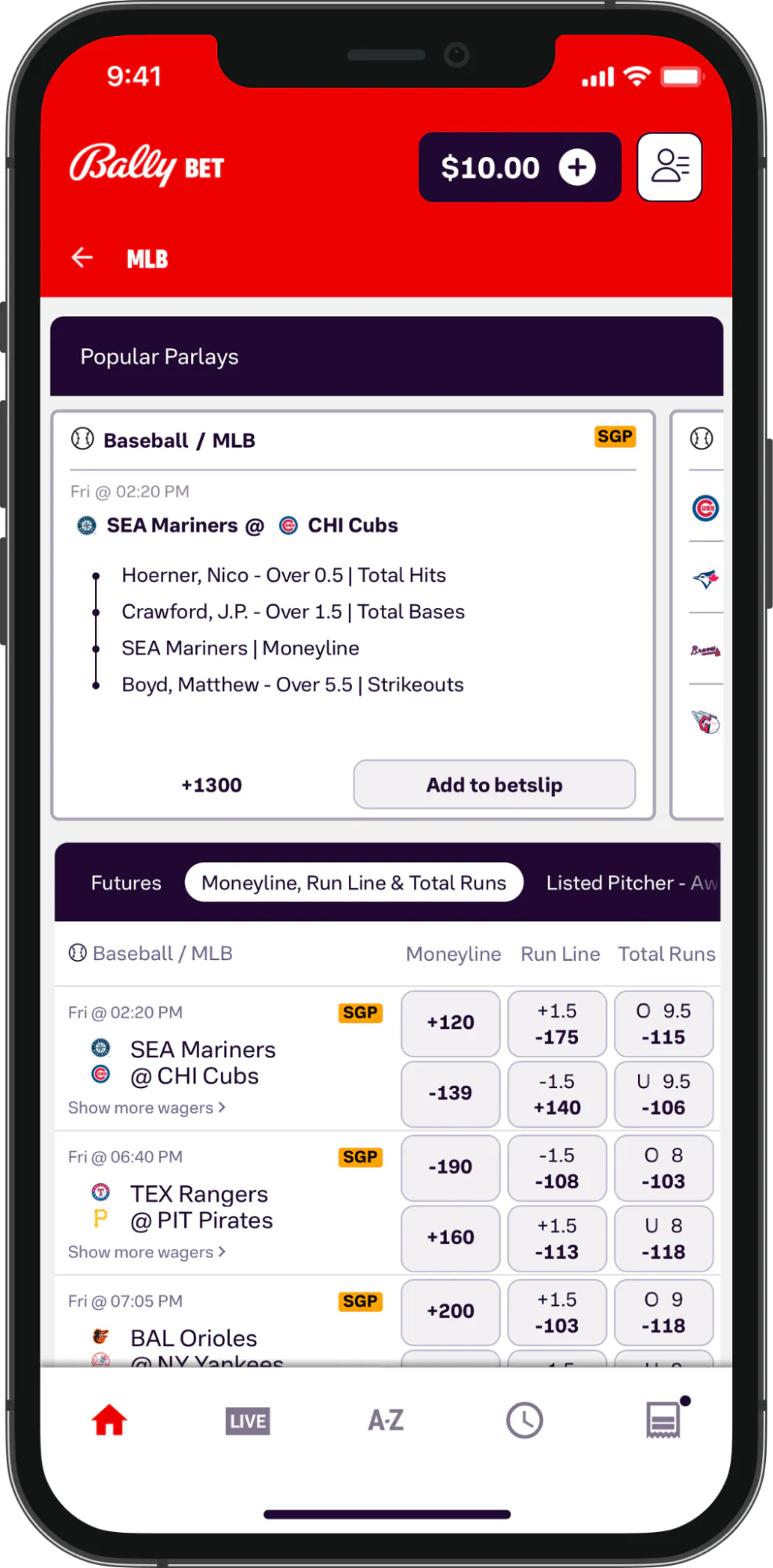
Platforms like DraftKings let users adjust same-game parlays while odds update before confirmation. That flow relies on optimistic UI updates backed by server-side validation to prevent stale pricing.

Live & In-Play Betting
Live betting is a primary engagement driver — and the most volatile operating environment for a sportsbook.
Supporting in-play markets requires:
- Sub-second data ingestion
- Continuous risk recalculation
- Exposure balancing across outcomes
- Automated market suspension triggers
Traffic spikes during major events demand horizontal scalability. Super Bowl traffic is predictable; system instability isn’t.
Engagement & Retention Features
User acquisition costs in online gambling are high. Top operators like DraftKings report blended acquisition costs around $300 per user, and in high-tax U.S. states, CAC can exceed $500 per user.
Retention drives long-term economics. That’s why modern mobile betting apps often include:
- Live bet tracking feeds
- Push notifications for odds changes
- Social contests and challenges
- Leaderboards
- Community chat
Dabble is a good example of this in practice. Rather than competing on promotions alone, they built social features (a live feed of bets placed by other users, bet copying, and community chat channels) directly into the core product.
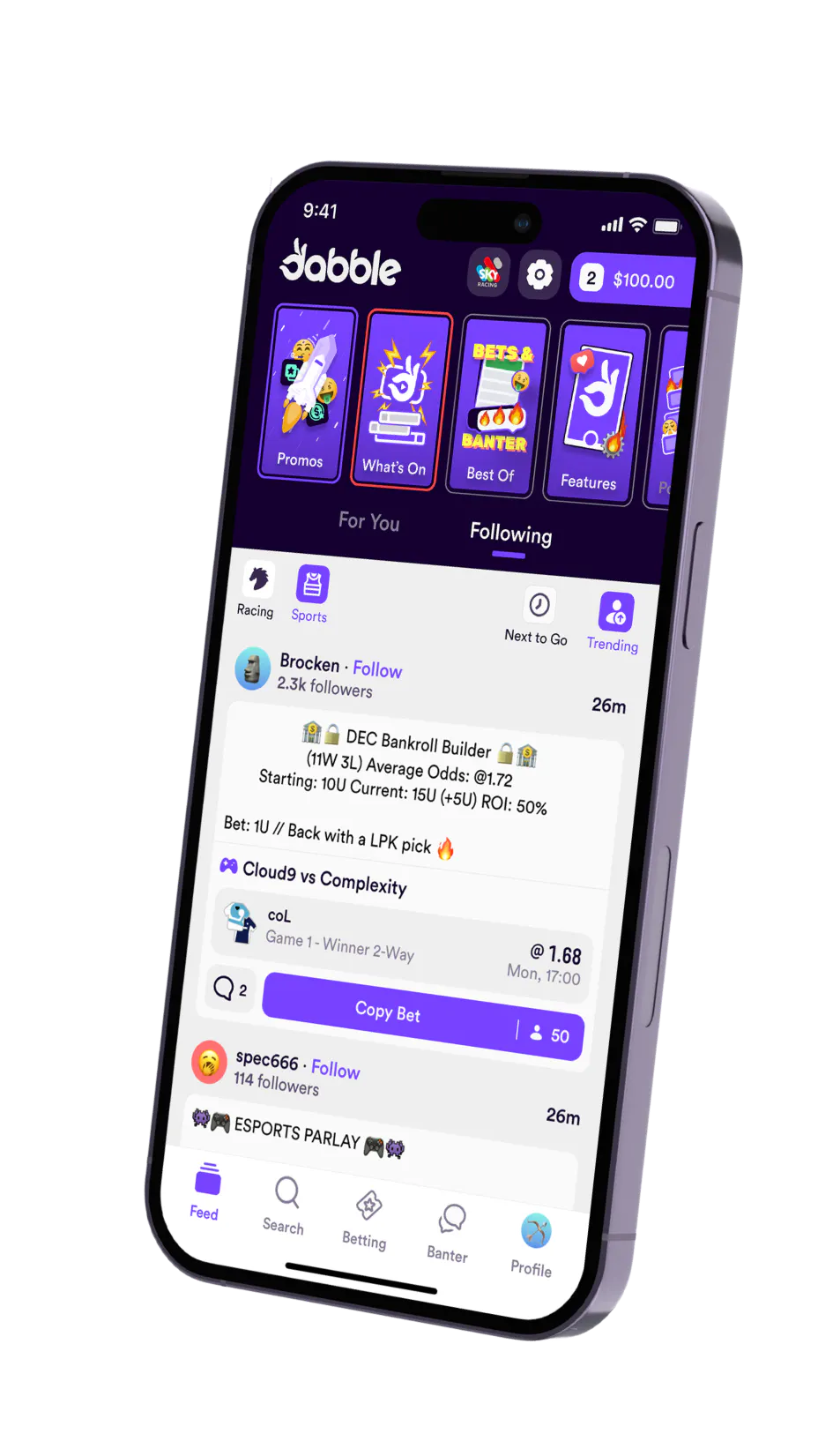
Across the board, the makers of top betting apps invest heavily in features that extend session length and encourage repeat visits. The tradeoff: Increased traffic volatility during major events.
If performance slips in those moments, session length drops and retention gains erode. Engagement systems need to perform as reliably as the betting engine itself.
Responsible Gambling Controls
Betting platforms carry financial and behavioral risk. Because of that, regulators expect responsible gambling safeguards to be embedded into the product.
Common requirements include:
- Deposit limits
- Cooling-off periods
- Self-exclusion programs
- Activity tracking dashboards
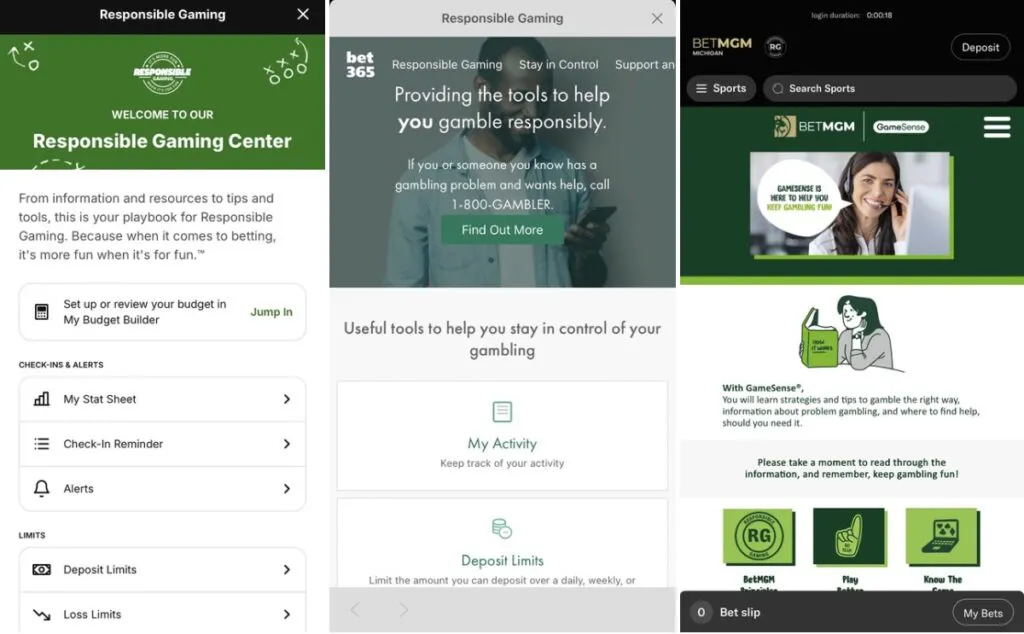
These controls connect directly to wallet services and transaction logic. Deposit limits shape funding flows, self-exclusion changes account permissions, and cooling-off periods alter wagering eligibility — each with architectural implications.
Responsible design also extends beyond compliance. Clear activity history, transparent loss tracking, and friction at moments of high risk shape user trust and long-term sustainability.
These features set the bar. Next is turning them into a build plan.
Step-by-Step: How to Create a Betting App
Turning strategy into a shipped product requires disciplined sequencing. Here’s how the teams behind today’s best new betting apps approach it.
Step 1: Define Your Jurisdiction & Secure Licensing
Start with geography. Jurisdiction determines your licensing cost, tax burden, launch timeline, and more.
Before committing engineering resources, clarify:
- Upfront licensing fees and renewal costs
- Tax structure on gross gaming revenue
- Market access requirements (including casino partnerships, where applicable)
- Certification, independent lab testing (e.g., GLI/BMM), and regulatory review timelines
Licensing approval often takes longer than product development. Your roadmap should reflect that constraint.
Step 2: Select Your Betting Model
Commit to a wagering model before finalizing system design.
Your model determines how revenue is generated and how risk is carried. For example:
→ A fixed-odds sportsbook manages exposure per event.
→ An online casino relies on statistical margin across high-volume play.
→ Exchange and prediction models depend on liquidity depth and order flow.
This decision shapes pricing logic, settlement mechanics, and capital requirements. It should be resolved before architecture hardens.
Step 3: Design the Core Architecture
Before feature expansion, define the core architecture.
A typical stack may include:
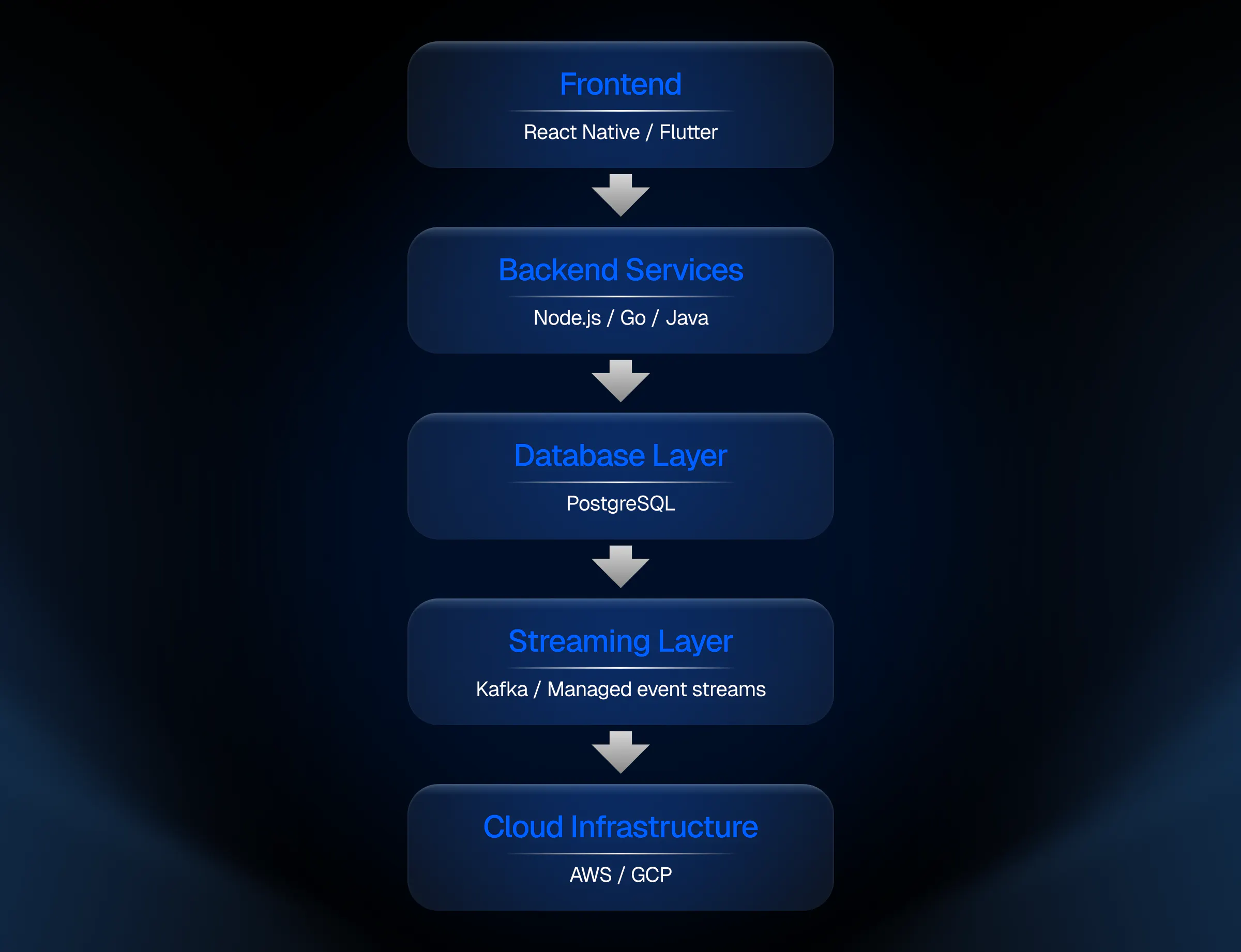
More important than language choice is service separation. Critical components — wallet, risk, compliance, and real-time update layers — should operate as isolated services.
Design for peak load early. Horizontal scalability is much easier to build in than to retrofit after launch.
Step 4: Scope and Ship a Focused MVP
Limit surface area and protect reliability.
An initial sportsbook MVP might include:
- Pre-match betting only
- A limited set of leagues
- A basic promotional engine
- No live streaming
The goal is to validate margin assumptions, transaction stability, and early retention behavior under real traffic.
Expanding into live betting, streaming, or advanced promotions should follow once core systems prove stable.
Step 5: Integrate Payments and Fraud Controls Early
Gambling apps are classified as high-risk merchants by most payment providers. That classification affects fees, approval rates, and fraud scrutiny from day one.
Plan for:
- Higher payment processing costs
- Chargeback exposure
- Bonus abuse
- Multi-account fraud
Fraud scoring and AML monitoring should integrate directly with wallet and transaction systems. Early investment here protects margin and reduces operational friction as volume scales.
Step 6: Stress-Test the System Before Launch
Test the platform under real-world conditions before going live.
Simulate:
- Peak wager volume
- Wallet concurrency under simultaneous deposits and withdrawals
- Geo-fencing accuracy across edge cases
- Settlement logic under disputed or delayed results
- Outage and failover recovery
When real money moves in real time, stability protects revenue and user trust. Knowing how to create a betting app at scale comes down to disciplined sequencing across licensing, architecture, payments, and resilience.
From that foundation, you’re ready to formalize the economic model behind the platform.
How Do Betting Apps Make Money?
In betting platforms, margin is engineered. How you generate revenue depends on how you price risk, balance liquidity, or structure payouts.
- Margin on Odds: Sportsbooks embed margin into spreads and pricing; even modest hold rates scale with volume. New York sportsbooks recently posted a 10.26% hold on $2.44 billion in wagers — about $250 million in revenue, reflecting the leverage of high handle.
- Rake Model: Daily fantasy sports and pooled contests generate revenue by taking a percentage of entry fees before payouts. Underdog Fantasy takes roughly 10–15% of entry pools, a structure that scales with participation.
- Promotions & Free Bets: In competitive U.S. markets, betting apps with free bets — like Caesars Sportsbook’s first-bet insurance and bonus bet offers — are used to drive deposits and engagement. Incentives must be modeled carefully given fraud, margin, and compliance risk.
- Cross-Sell Economics: Public reporting from Flutter (FanDuel) and DraftKings shows sustained double-digit growth across sportsbook and iGaming segments, reinforcing the economic advantage of multi-vertical models.
- Partnerships & Media: League integrations and sponsorships support acquisition and retention. For example, BetMGM’s partnership with Major League Baseball integrates official league data and branding into its sportsbook experience.
Promotion strategy should connect directly to risk systems to manage abuse, bonus arbitrage, and multi-account behavior.
How Much Does it Cost?
New betting apps require investment across product build, regulatory approval, infrastructure, and customer acquisition. Costs scale based on jurisdiction and feature complexity, and engineering is only part of the total outlay.
Licensing, regulated data access, fraud systems, and marketing often push first-year spend well beyond the initial build budget. For regulated U.S. launches, it’s common to plan for a seven-figure first-year investment.
At a high level, costs typically break down across the following areas:
| Cost Center | Estimated Range | Notes |
|---|---|---|
| Development | $150K–$300K (MVP) | Limited scope, pre-match focus |
| $300K–$750K (Mid-range) | Expanded markets & features | |
| $1M+ (Enterprise) | Full-scale, multi-state systems | |
| Licensing | $100K+ per state | Varies by jurisdiction |
| Data Feeds | Tens of thousands/month | Official league data pricing |
| Compliance & Legal | Ongoing staffing costs | AML, reporting, audits |
| Marketing | $200–$400+ per depositing user | U.S. CAC benchmarks (Eilers & Krejcik Gaming) |
Cost planning should align with your wagering model, jurisdiction, and growth targets. In regulated markets, misjudging capital requirements can derail even well-built products.
FAQs
Where Is It Legal to Create a Gambling App?
It’s legal to operate regulated gambling apps only in jurisdictions that have explicitly authorized the specific wagering model you’re offering.
In the U.S.:
- Sports betting apps, which are regulated at the state level, are legal in over 30 states.
- Online casino (iGaming) apps are currently legal in eight states.
- Daily fantasy sports apps operate in most U.S. states, but regulatory classification and licensing requirements vary by jurisdiction and contest format.
- Prediction markets operate under federal CFTC oversight and are authorized at the national level rather than state-by-state, though access may still be restricted in certain jurisdictions.
Outside of the U.S., legality can vary by country, province, or territory. Before entering a market, confirm your model is authorized and that you meet local licensing requirements.
How Long Does It Take to Create a Betting App?
A focused MVP built on licensed third-party infrastructure typically takes 6–9 months.
Enterprise-grade platforms — especially those spanning multiple jurisdictions — often require 12–18 months when factoring in certification, integration, and infrastructure hardening.
What’s the Right Technology Stack for a Betting App?
Choose a stack that supports real-time data, transactional integrity, and horizontal scalability.
Common patterns include:
- Cloud infrastructure (AWS or GCP)
- Event-driven microservices
- A relational database like PostgreSQL
- Streaming systems like Kafka or managed event pipelines
- Real-time messaging APIs for feeds and notifications
In betting platforms, language choice is secondary. What matters is service isolation for wallet and risk systems, reliable event processing, and fault tolerance under peak load.
Building an Online Betting App That Scales
Launching a betting app requires alignment across product, engineering, compliance, and finance. Peak-load performance, regulatory architecture, risk modeling, fraud controls, and retention systems all need to work together from day one.
Teams evaluating how to create a betting app should treat it as infrastructure-first product development. Reliability supports trust, volume, and ultimately margin.