

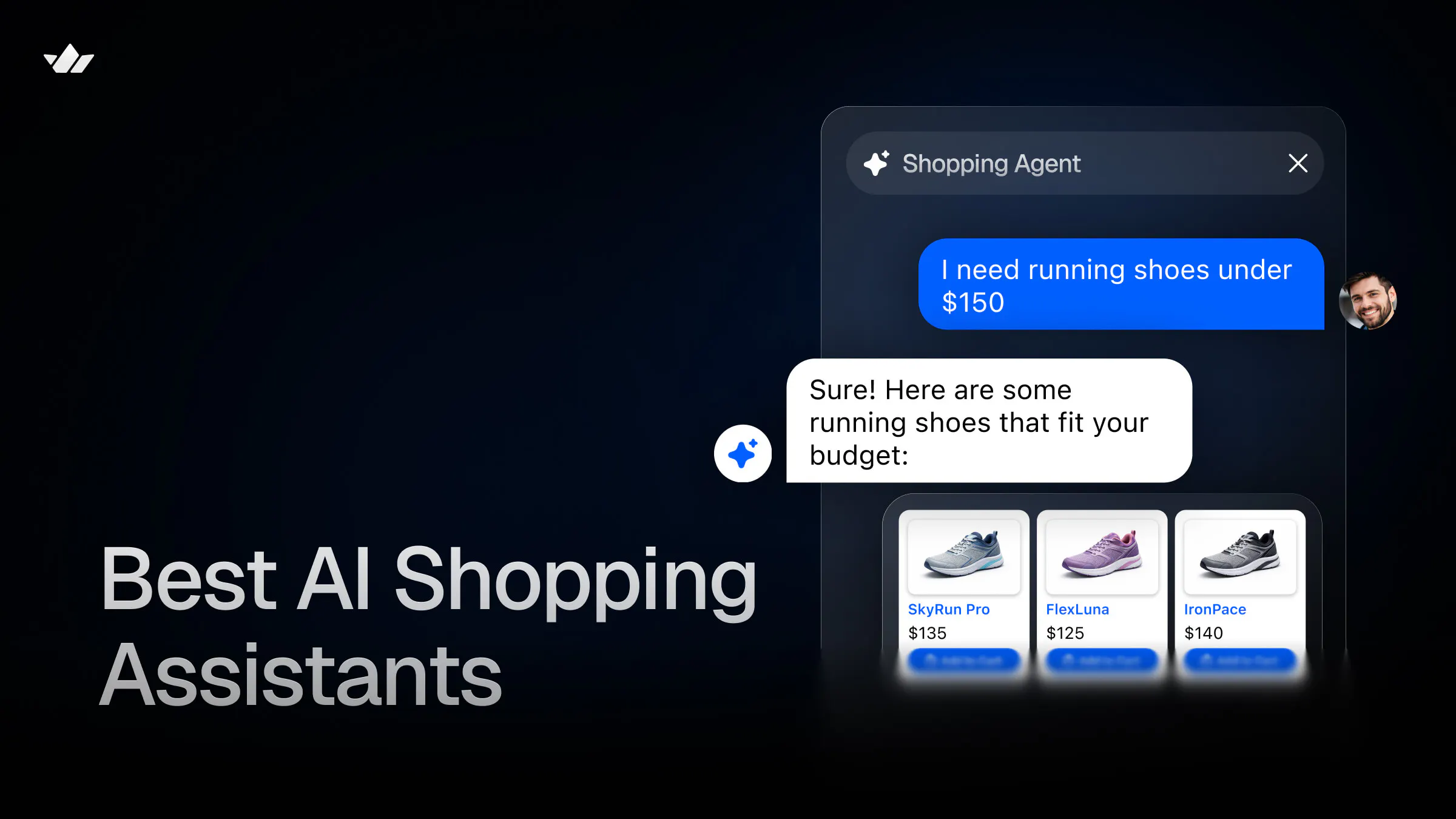
Most eCommerce platforms were built for browsing. But shoppers today expect more. They want platforms to understand their intent, recommend the right options, and make checkout feel effortless.
AI shopping assistants are meeting that expectation, and shoppers have already caught on. 56% say AI helps them better understand products, and 55% say it helps them discover goods they actually like.
The market for these tools is growing fast, and so is the variety. If you're evaluating AI shopping assistants for your own platform, here's a breakdown of the top options and what each one does best.
What Are AI Shopping Assistants?
AI shopping assistants are software tools that guide customers through the online buying journey in a natural way. They appear on websites, apps, and messaging platforms, where they act as a link between a brand and its shoppers.
Traditional eCommerce search bars depend on keywords and filters. AI shopping assistants, however, let people explain what they need in their own words and receive guided help in return, which is also known as conversational commerce.
For example, a shopper might type, “I’m looking for a fitness wearable under $200 to track sleep.” The assistant understands the request and shows suitable options, so the shopper does not have to scroll through products one by one.
13 Best AI Shopping Assistants
AI shopping assistants come in many types.
Below are the main categories we will cover:
- Conversational AI Shopping Assistants: Assist shoppers through live, chat-based interactions
- Platform-Embedded Assistants: Integrate directly within existing commerce platforms
- Visual Discovery Tools: Enable product search through images
- Infrastructure for Custom Assistants: Provide technology to build tailored solutions
For each category, we’ll share leading platforms and highlight their key features.
Comparison Table
| Platform | What It Is | Distinguishing Features |
|---|---|---|
| Alhena AI | Zero-hallucination AI shopping assistant | Only responds using live business data; multi-agent system for search, support, and orders |
| Rep AI | Behavioral shopping companion | CABBE engine analyzes digital body language (scrolls, hovers) to trigger interventions |
| eesel AI | AI support + catalog assistant | Pulls from helpdesk history, internal docs, and tickets for policy-based answers |
| iAdvize | Hybrid AI + human expert platform | ibbü expert community + visual co-browsing |
| Manifest AI | Multi-agent commerce suite (500+ agents) | Specialized agents (sales, support, fit predictor) covering full journey |
| Gorgias AI | Shopify-native omnichannel agent | SMS/WhatsApp/email/chat unification |
| Bloomreach | AI-driven discovery and merchandising engine | No-code ranking control + predictive churn targeting |
| Shopify Sidekick | Built-in Shopify admin AI assistant | Generates content, reports, apps inside Shopify |
| Syte AI | Visual product discovery engine | 15K+ attribute lexicon for precise tagging |
| Google Lens Shopping | Visual search tool tied to Google ecosystem | Camera-based discovery + Circle to Search + local inventory lookup |
| Algolia (Agent Studio) | Developer framework for building custom AI agents | LLM-agnostic; search-native retrieval tied to structured product indices |
| Constructor | Headless discovery platform | Behavioral ML discovery (not keywords) |
| Shopify Storefront MCP | Commerce backend infrastructure | Single connection layer for carts, orders, returns; model-agnostic |
Conversational AI Shopping Assistants
Alhena AI

Alhena AI is built on a zero-hallucination architecture. This means it only gives answers based on a brand’s real, live business data and doesn’t invent information.
Key features:
- Multi-Agent Orchestration: Uses different agents for search, support, and order tasks, managed by one central planner.
- Agentic Workflow Execution: Connects to eCommerce systems to complete actions like returns, order tracking, and account updates.
- Vertical-Specific Analyzers: Uses computer vision and shopper data to give precise recommendations, such as size guidance or skin-based product suggestions.
Rep AI

Rep AI has the proprietary Conversational, Analytical, Behavioral, Brand, and Emotional (CABBE) model, which combines five intelligences to replicate a dynamic shopping experience.
Key features:
- CABBE Behavioral Engine: Monitors digital body language (mouse movements, scroll depth) to offer support only when a shopper is confused or disengaged.
- Contextual Rescue Prompts: Instead of a generic "Don't go!" discount, the AI triggers messages based on the behavior, like "Curious if this item is compatible with your current setup?"
- Shopper Intelligence Analytics: Maps conversations back to specific drop-off reasons to identify missing site content or pricing friction.
eesel AI

While Alhena AI and Rep AI lean heavily into product discovery and conversion, eesel AI strengthens the journey with deep, system-level support. It not only understands your product catalog, but it also pulls from past tickets, internal docs, and help desk history to resolve questions that stall purchases.
Key features:
- Live Knowledge Layer Across Systems: Connects directly to Zendesk, Freshdesk, Confluence, Slack, and Google Docs, without data migration, to answer detailed questions about orders, shipping rules, returns, and edge-case policies.
- Simulation-Based Training: Tests the AI on past support tickets before launch to measure accuracy and performance.
- Gradual Teammate Rollout: Starts as a copilot drafting replies for staff, then can move to fully autonomous support.
iAdvize

iAdvize stands out for its ibbü Expert Community, a network of trained, independent product specialists who provide real, peer-to-peer shopping advice. Brands can activate these experts alongside AI to offer guidance rooted in firsthand product experience.
Key features:
- Visual Co-Browsing: Allows agents to see a shopper’s screen in real time and guide them through pages or checkout.
- Enterprise-Grade Security: iAdvize is one of the few platforms to hold ISO 27001 certification alongside full GDPR compliance. It also protects data with encryption both at rest and in transit.
- Proactive Engagement Triggers: Starts conversations based on shopper behavior, such as time on page, cart value, or browsing patterns.
Manifest AI

Manifest AI offers a suite of 500+ specialized AI agents, each built to handle a distinct role across the eCommerce experience. Think Jack, a sales agent that matches products, drops quizzes for indecisive shoppers, and slips in coupon codes before drop-off. Or Sarah, a support agent that handles queries, tracks orders, and manages returns in seconds.
Key features:
- AI Fit Predictor: Recommends the perfect size for every shopper based on their height, weight, and individual fit preference.
- AI Trivia: Generates fun, engaging product facts on the fly to spark customer interest and boost time-on-page.
- Deep Tech Stack Integration: Connects directly to your store's inventory and existing help desks (Gorgias, Zendesk) to ensure all AI responses are aligned with real-time, policy-compliant data.
Platform-Embedded Assistants
Gorgias AI Shopping Assistant
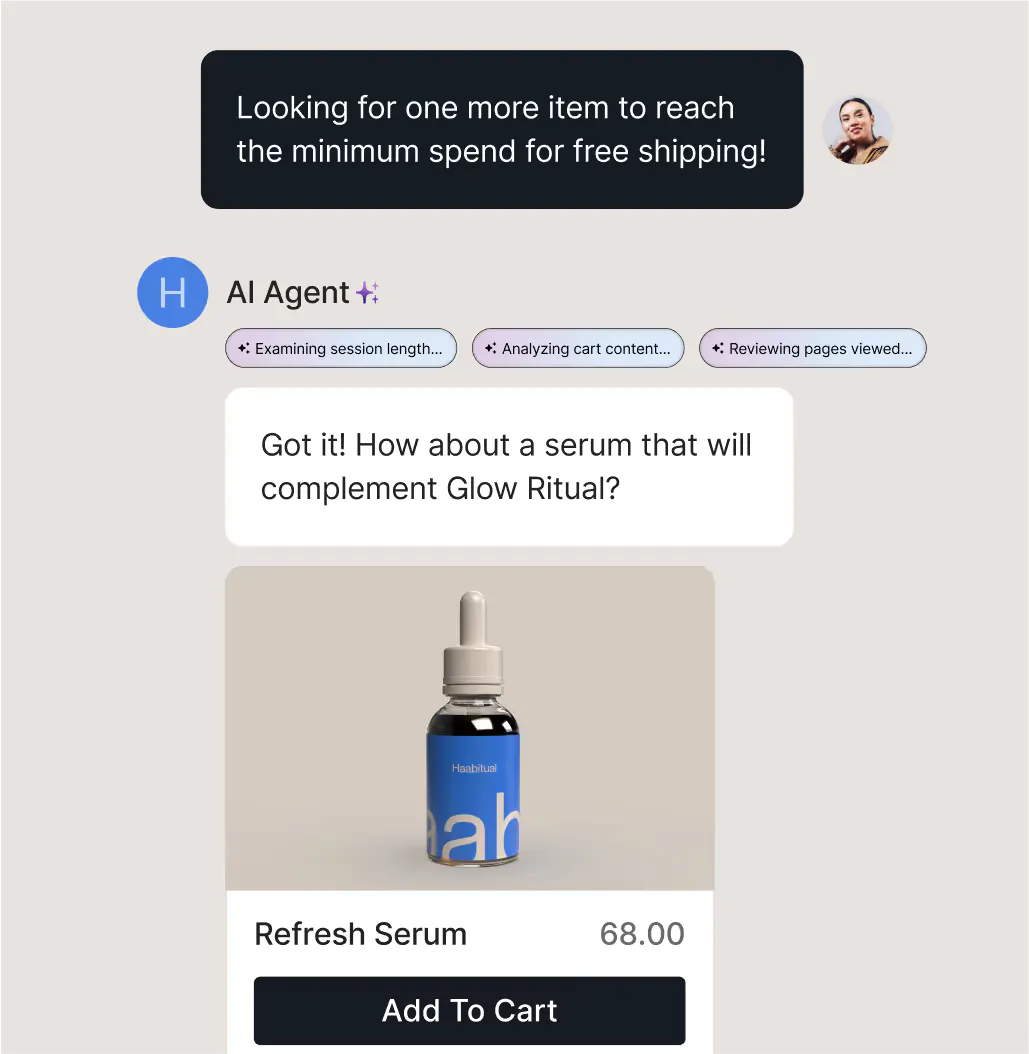
Gorgias AI is purpose-built for eCommerce, offering a deep, native integration with Shopify’s full catalog and order data that other solutions like Zendesk AI and Intercom AI don’t offer.
Key features:
- True Omnichannel Support: Unlike some tools with partial support, Gorgias natively unifies conversations across SMS, WhatsApp, email, and live chat.
- Auto QA Performance Engine: Automatically evaluates 100% of human and AI interactions against key metrics like empathy and accuracy, giving support leaders clear, data-driven coaching insights.
- Advanced Intent Detection: Automatically categorizes incoming messages by purpose and urgency, enabling precision routing.
Bloomreach

Bloomreach offers a no-code dashboard where merchandisers can adjust ranking logic based on margin, inventory, seasonality, or local trends, aligning search results with business goals.
Key features:
- AutoSegments: Automatically identifies high-value customer segments by analyzing behavioral and purchase data, so marketers can target the right audiences without manual rule-building.
- Predictive Churn: Detects customers likely to drop off and chooses the best time and channel (email, SMS, or push) to re-engage them.
- Contextual Weblayer Testing: Generates and tests different banners, pop-ups, and offers in real time to see which version performs best.
Shopify Sidekick

Sidekick is Shopify’s built-in AI assistant that helps you run your store more efficiently. It can generate blog posts, marketing copy, and other content, but it never makes changes without your approval.
Key features:
- Data insights: Create custom ShopifyQL queries to explore your store data and customize reports. Sidekick can also present insights in easy-to-read charts, including line, bar, and donut visualizations.
- Personalized recommendations: It reviews your store’s performance and provides specific suggestions to help you improve results.
- App creation: Describe the tool or app you need, and Sidekick will build it directly inside your Shopify admin, refining it further based on follow-up prompts.
Visual Discovery Tools
Syte AI

Syte AI is a product discovery engine designed specifically for apparel, jewelry, and home décor brands.
Key features:
- Attribute Intelligence Built for Fashion: Syte automatically analyzes catalog images and generates highly granular tags like neckline type, silhouette, fabric, print, or occasion. It's backed by a 15,000+ fashion and lifestyle attribute lexicon, including synonyms.
- Visual Understanding Beyond Keywords: Its AI recognizes product category, brand, gender, and age directly from images, ensuring visual search and camera-based discovery reflect shopper intent.
- AI Styling and Shop-the-Look: Combining visual and generative AI, Syte suggests complete outfits and complementary items based on trends and your live inventory for better cross-sell opportunities.
Google Lens Shopping
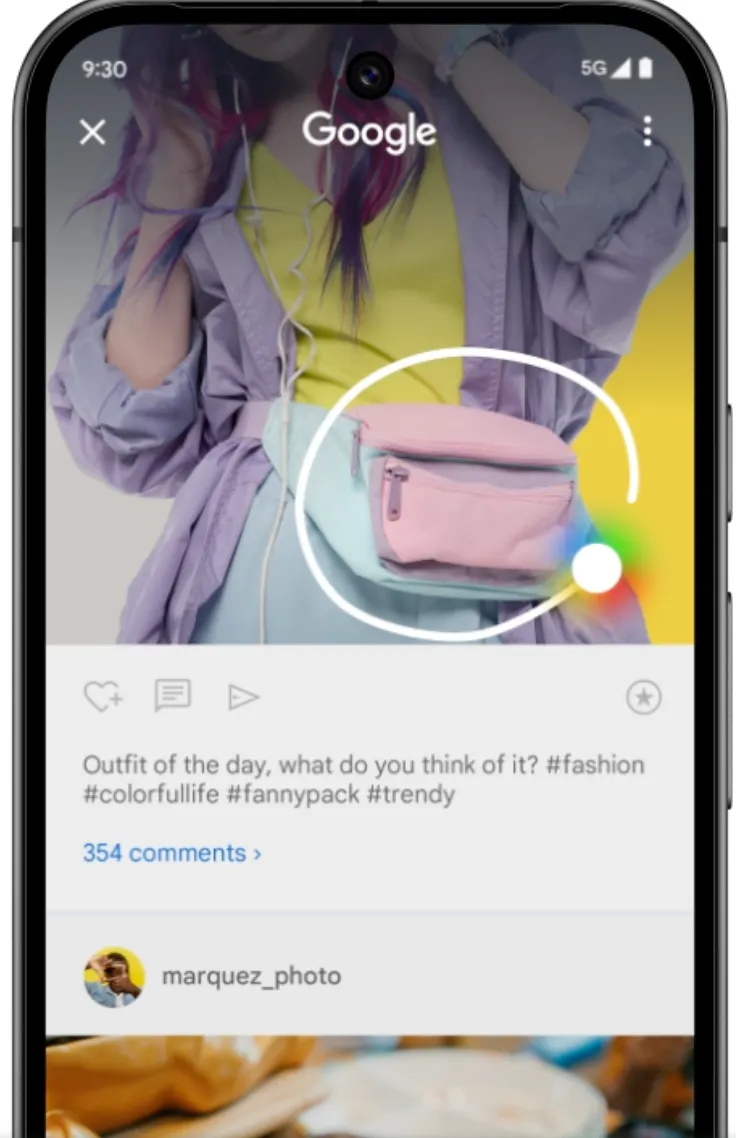
Unlike basic chatbots that only work with text or pre-loaded product data, Google Lens can use real-world images to find matching products in Google Shopping.
Key features:
- Video Search: Record a short video of up to 20 seconds of a product and ask a related question. Lens analyzes both the visuals and the user’s voice query to give a context-aware answer.
- Circle to Search: Lets users circle or scribble over any item on their screen to instantly identify it, see pricing, and check availability.
- Local Store Inventory Lookup: Scan a product to view nearby availability, competitor pricing, and customer reviews.
Infrastructure for Building Custom Assistants
Algolia
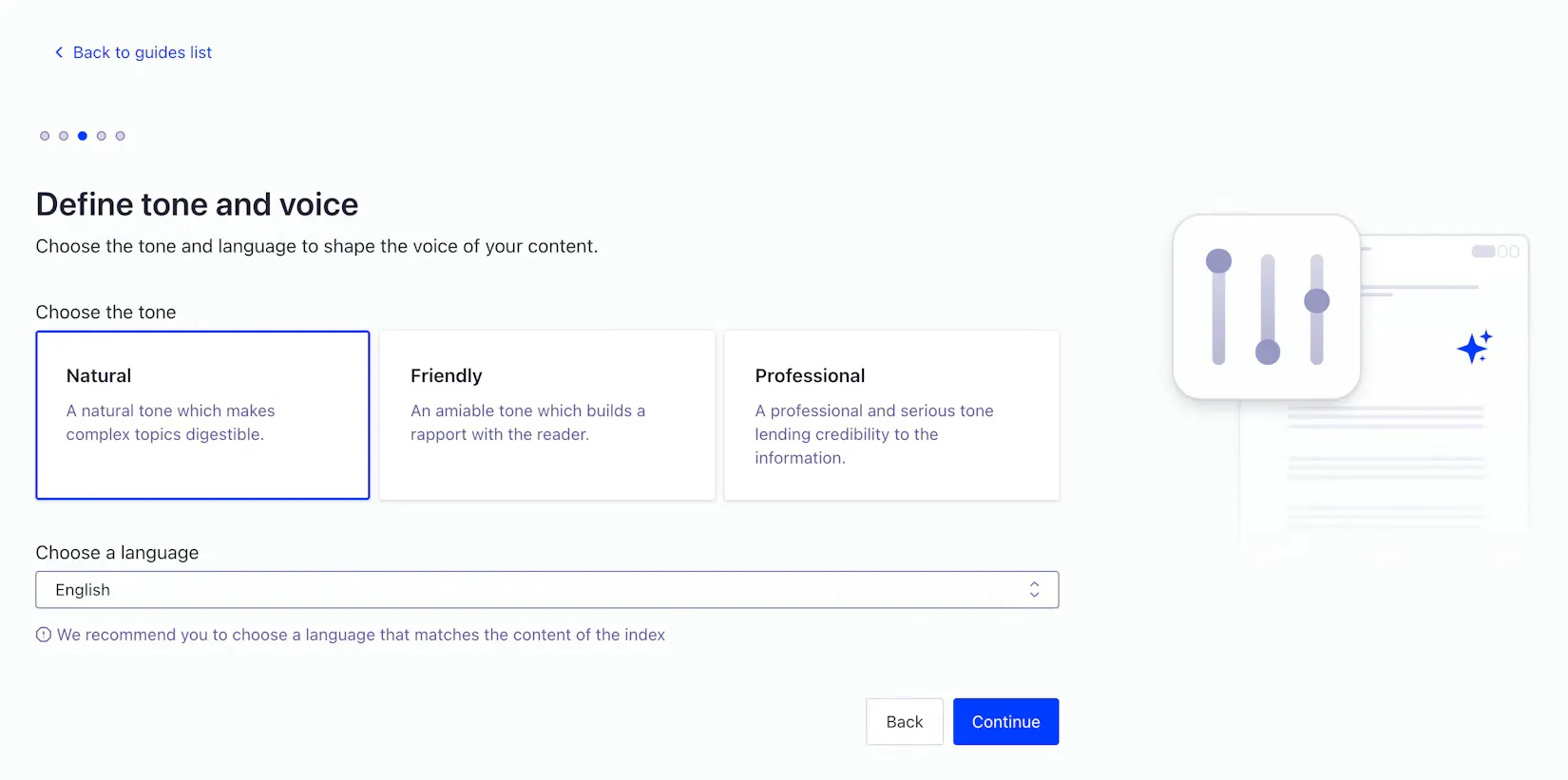
Algolia’s core offering is the Agent Studio, which is a developer-focused framework designed to help eCommerce brands build, test, and deploy custom AI shopping assistants.
Key features:
- On-the-Fly Shopping Guides: Automatically generates interactive shopping guides that appear alongside search results, offering curated lists and context that tie accessory products back to your higher-ticket items.
- Search-Native Retrieval: Shares responses directly in your structured product indices, ensuring that every recommendation is tied to your live inventory.
- LLM-Agnostic Flexibility: Provides a standardized marketplace API layer that lets you swap between different LLMs without re-engineering your storefront integration.
Constructor

Constructor is an AI-native discovery platform powered by a Native Commerce Core™. Instead of relying on legacy keyword or vector engines, it uses real-time behavioral data and machine learning to optimize product search and discovery.
Key features:
- AI-Native Agentic Suite: Includes pre-built agents like an AI Shopping Agent for product discovery and a Product Insights Agent for improving conversions.
- Frontend Flexibility: Lets you build your storefront using React, Vue, or custom frameworks and connect Constructor through APIs.
- API-first Reasoning Engine: Processes real-time clickstream data, catalog updates, and custom business rules. This allows you to build custom workflows where the AI remains aware of your unique brand policies, inventory constraints, and merchandising logic.
Shopify Storefront MCP

Storefront MCP is a backend infrastructure that connects AI models directly to live Shopify store data. Instead of building separate integrations for products, carts, orders, and store policies, developers use it as a single connection layer.
Key features:
- Real-time commerce action access: Direct capability for AI assistants to create and manage carts, retrieve order status, and handle return-related workflows.
- Model-agnostic architecture: Flexibility to connect different AI models without rebuilding Shopify integrations.
- Frontend–backend separation: A backend MCP client for logic and store access, paired with a theme extension that displays the customer-facing chat interface.
Common Capabilities of Shopping Assistants
Most AI shopping assistants share a common set of foundational capabilities. While features may vary by vendor, the following functions appear across leading solutions.
Intent Understanding
Intent understanding allows the assistant to interpret user queries and map them to real product needs. If someone types, “I need curtains that block light for my bedroom,” the assistant identifies the product need and suggests suitable options without requiring manual filters for fabric or lining.
Contextual Recommendations
These ensure that suggestions adapt based on browsing history, cart activity, or profile data to keep results relevant.
Semantic Product Comparison
Semantic product comparison enables the assistant to explain meaningful differences between similar products. When asked to compare two smartphones, it highlights battery life, camera quality, and software support instead of raw technical specifications.
Natural Language Explanations
Natural language explanations translate structured product data into clear, simple guidance that shoppers can easily understand.
In-Conversation Actions
In-conversation actions allow shoppers to complete tasks without leaving the chat, such as adding items to cart or starting a return.
Dynamic Offer Triggers
These surface relevant discounts or bundles in real time based on cart value, browsing behavior, or inventory signals.
Payment Awareness
Payment awareness ensures the assistant recognizes store credits, reward points, or wallet balances and applies them at checkout or suggests splitting payment between available methods.
Benefits of AI-Powered Shopping Assistants
Increased Sales
By guiding discovery, answering questions in real time, and reducing uncertainty, shopping assistants shorten the path to purchase.
Shoppers who engage with AI-powered chat are 4X more likely to convert than those who do not.
Improved Personalization
AI assistants deepen personalization. They can surface recommendations based on past purchases, browsing behavior, and real-time preferences. Plus, if a shopper doesn’t like a product, they can instantly request alternatives (like “Find this in black”), creating a responsive shopping experience that feels one-to-one.
Personalization, which assistants excel at, generates up to 40% more revenue.
Reduced Strain on Customer Service Personnel
AI-powered shopping assistants can be integrated with support chatbots to receive support in the same chat window, freeing up human agents for more important matters.
AI tools can resolve up to 93% of customer inquiries without human intervention.
Built-In Discovery Analytics
When implemented responsibly, AI shopping assistants surface patterns from shopper conversations, revealing common product questions, website friction, and checkout blockers, so teams can fix gaps in the sales journey.
Businesses that track omnichannel journeys often see 20–30% higher customer retention growth.
Easily Integrated
AI shopping assistants can plug into existing tech stacks and commerce platforms like Shopify and WooCommerce, with flexible models and pricing options, making it simple for brands to adopt and scale them.
3 Examples from Big Brands
Amazon Rufus
Rufus is Amazon’s in-app AI shopping assistant, trained on its product catalog, reviews, and community Q&A. It helps shoppers turn broad research, like “What do I need for indoor gardening?”, into clear, shoppable options. It also offers price tracking and an AutoBuy feature.
PM Takeaway
Ground your assistant in proprietary data and connect discovery directly to transaction triggers.
Walmart Sparky

Sparky is Walmart’s agentic shopping assistant built to do more than suggest products. It can plan events, guide DIY tasks, and automatically add required items to the cart. It also reads customer reviews to inform its recommendations.
PM Takeaway
Design beyond simple product search. When your assistant helps users complete a task, it naturally leads to larger, more intentional carts.
Taobao Wenwen

Wenwen is Taobao’s AI shopping assistant that delivers tailored recommendations with brand, price, and seasonal relevance. Results appear in text and short video formats with direct links to product pages and livestreams. It also synthesizes millions of consumer reviews to generate clear “Pros and Cons” summaries for similar products.
PM Takeaway
This highlights the power of structuring user-generated content to build trust and accelerate decisions.
Frequently Asked Questions
What Is the Best AI Shopping Assistant?
There is no single best AI shopping assistant. The right choice depends on your business goals, existing systems, and the specific problems you want to solve in the user buying journey.
What Is the Best AI Assistant for Sales?
It depends on whether your focus is lead conversion, upselling, cart recovery, or post-purchase support. Tools aligned with your sales workflow will deliver the most impact.
How Is Zara Using AI?
Zara uses AI for demand forecasting, inventory optimization, and supply chain planning to align production with real-time trends.
Can ChatGPT Help With Shopping?
ChatGPT can assist with research, comparisons, and product recommendations, but it is moving away from its plans to allow users to complete transactions on-platform as of March 2026.
Does JCPenney Use AI?
Yes. JCPenney uses AI to improve forecasting, demand planning, and internal reporting. Additionally, through its partnership with Revieve, JCPenney offers AI-powered skincare analysis to personalize product discovery and shopping journeys.
Conclusion
AI shopping assistants vary based on business model, data maturity, and where friction appears in the buying journey. So how do you choose the right one?
- If you’re a large marketplace or retailer, a deeply embedded, first-party assistant tied to live inventory, pricing, and reviews will deliver the most control and scale.
- If your priority is conversion and product discovery, choose a discovery-led platform with strong search, comparison, and merchandising controls.
- If cart abandonment is driven by support and policy questions, a helpdesk-integrated assistant that connects to order data and internal documentation will create the biggest lift.
- If you want a fully customized experience, consider infrastructure tools that let you build and train your own assistant on proprietary data.