
 React
React iOS
iOS Android
 Flutter
 JavaScript
 Unity
Unity ESP32
ESP32 Platform
 Vision Agents
call.state.pin(userId, sessionId)Pinning participants
The StreamVideo SDK has support for pinning users, both locally for the current user, and remotely for everyone in the call.
Every user can pin as many participants on the call as they want, and those users will be shown first in the list of participants for that user. Pinning someone for everyone in the call requires the pinForEveryone capability.
By default, the pinned users appear first on the participants array. The ones which are pinned remotely appear before the local ones. If there are several remotely pinned users, they are sorted by the pinning date (the most recent pins appear first). You can change this sorting behaviour with your own implementation.
Local pins
In order to pin a user locally you can use the following API.
The userId and sessionId identify the user you want to pin.
To unpin the user you can call
call.state.unpin(sessionId)Use the same sessionId that was passed to pin(). Note that unpin() does not require the user ID.
Server pins
To pin a participant for everybody in a call you can create a server side pin.
The API for this is exposed via the call object rather than the state.
call.pinForEveryone(sessionId, userId)Same as for local pins, sessionId and userId are used.
To unpin a participant:
call.unpinForEveryone(sessionId, userId)Unlike local pins, server pins require the user ID. Before pinning for everyone, verify the user has the required capability. The request will fail if the capability is missing:
call.hasCapability(OwnCapability.PinForEveryone)Default UI
Currently the participant pinning can happen via the default UI from the SDK.
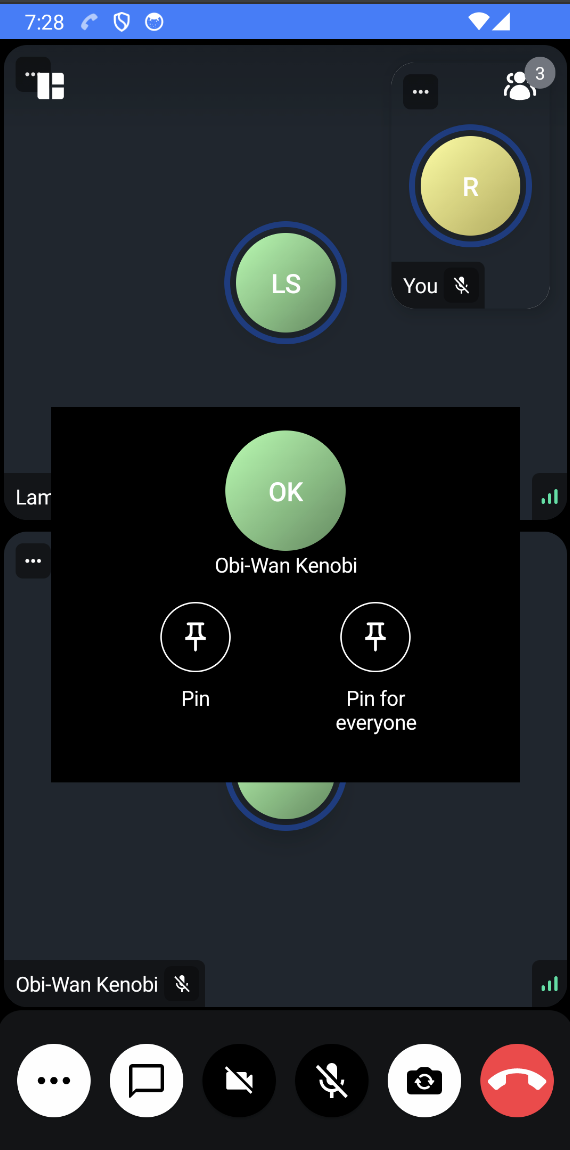
Or if the user is already pinned
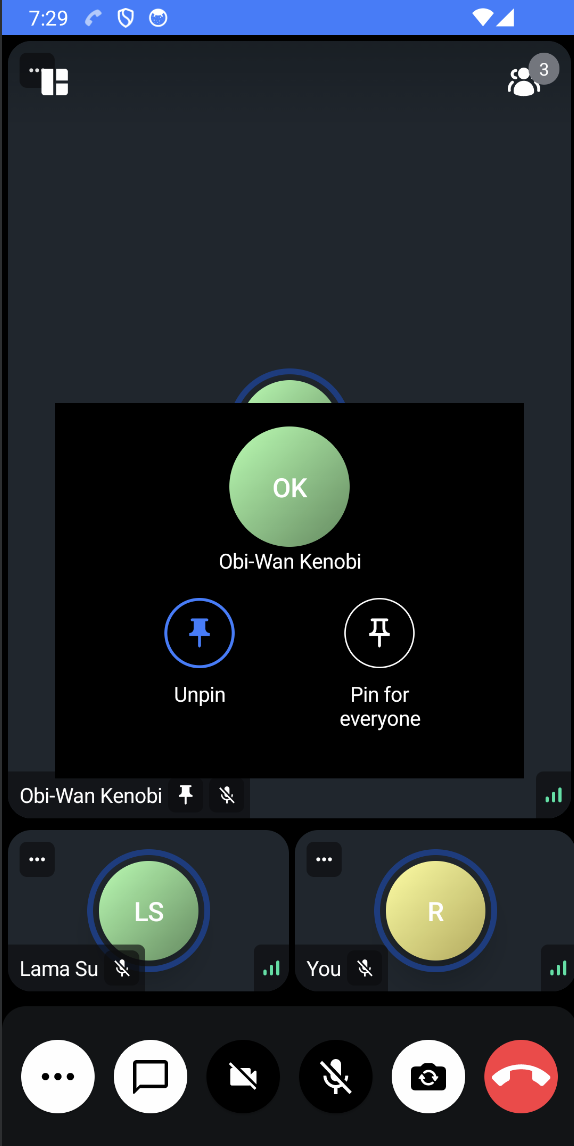
You can customize this UI and all the other participant actions by supplying a composable into the ParticipantVideo component.
val myActionsContent = @Composable { actions, call, participant ->
    CustomParticipantActions(
        Modifier
            .align(TopStart)
            .padding(8.dp),
        actions,
        call,
        participant,
    )
}

ParticipantVideo(
    actionsContent = myActionsContent
)